I apologize for my failure to post last week. I was drowning in year-end lists, you see.
When I told my non-music nerd friends that I was "drowning in year-end lists", I got a lot of blank stares. Turns out that assembling a list of one's twenty-odd favorite albums of the year, ranking them in order, and writing little hundred-word blurb about each is not something that normal people do.
We geeks are a different story. For us, the Top 20 Best ______s of 20__ is a yearly rite of passage. This ceremony is not exclusive to music nerds. Book nerds, TV nerds, video game nerds, and all manner of obsessive losers gleefully participate. Lower-ranking nerds post their picks on Facebook or their private blogs; the inner sanctum of nerdery distributes its lists via various print and web publications. The latter type of publication typically allows the hoi polloi to disagree via comment threads, and disagree they do. This dynamic has become so pervasive that NPR published a hilarious best-of list of best-of list complaints a few days ago.
I am privileged enough to belong to the music nerd illuminati (is 'privileged' the right word?), though I'm a low-ranking member. 2011 marks my seventh year in this dubious company, and so it was the seventh time that I produced a widely-viewed best-of list.
This was also the first year during which I participated in year-end feature writing for multiple publications. I wrote a personal feature for Metal Review, and scribed a couple of different things for Invisible Oranges. If you've never tried to sum up an album in a hundred words, here's a word to the wise—it's a lot harder than it sounds. I did most of my year-end writing in about ten days; if I don't have to boil down another record to public-service-announcement dimensions until December 2012, I will consider it a mercy.
Monday, December 19, 2011

Thursday, December 8, 2011
Managing expectations
 |
| God help me, I've become one of them. |
In any case, I came across a Cracked article a few days ago entitled "5 Jobs Everyone in the World Should Have At Some Point." Of the types of jobs it recommends everyone try, I've had two. And of those two, I currently hold one. Surprise! It's waiting tables.
You can probably guess why waiting tables was included in the article. The reasoning is familiar:
"You learn a whole lot about people by serving them. How a person behaves to the guy fetching his drinks says a lot about that person. And you, as a waiter, start to figure out what kind of person you want to be. Are you the guy who makes eye contact with your waiter and speaks to him like a human, or are you the guy who hisses when he wants to catch a waiter's attention (happened to me)? Everyone on the planet should know what it's like to have to serve someone else. It's humbling, and sometimes terrible, and some other times mostly OK."
Incidentally, I actually had a customer hit me to get my attention one time. I made eye contact with her and then slowly walked away without responding. Any customer who presumes to lay hands on me gets the cold shoulder.
In any case, this stuff is the truth. Shitty people tend to treat service-industry folks badly because they can get away with it. Dealing with this fact on a daily basis is an edifying experience. But I feel like I've taken away more important lessons from my serving experience than this one.
Tuesday, November 29, 2011
Forgive the crowing
First, to briefly follow up on my previous post:
Joshua Holland, who writes for the very left-leaning AlterNet.org, has published a brutal takedown of Naomi Wolf's Guardian piece on Congress's "conspiracy" against OWS. In fact, if you haven't read my own post on the subject, then you should just skip it and read Holland's instead. He put in more time, did more homework, and produced a way better writeup. But at least I've proven that I know bullshit when I see it!
Second, a bit of self-congratulatory crowing.
My band's debut album was just written up in Decibel Magazine, America's best and most popular metal publication. We scored an 8/10 and a very flattering review:
"Quick history lesson: Pyrrhon of Elis was a Greek philosopher acknowledged as the father of Skepticism (the school of thought, not the Finnish funeral doom band). Many of the downstream effects of Pyrrhon's philosophies will be familiar to metalheads—doubt of inherited values, rational inquiry into the nature of things, disregard for that which cannot be empirically proven, etc.
What does all this have to do with Pyrrhon the death metal band? In many ways, these Brooklynites' debut LP, An Excellent Servant but a Terrible Master, embodies the ideas of the band's namesake. Doug Moore's lyrics deal a lot with the impossibility of making meaning in a society that doesn't value it. "All the debased logic/The spent, weathered values/And the ashes of intentions/Bear their witness against me," he growls on the godly "Idiot Circles," incontinence-preventing riffs flopping around underneath him.
Joshua Holland, who writes for the very left-leaning AlterNet.org, has published a brutal takedown of Naomi Wolf's Guardian piece on Congress's "conspiracy" against OWS. In fact, if you haven't read my own post on the subject, then you should just skip it and read Holland's instead. He put in more time, did more homework, and produced a way better writeup. But at least I've proven that I know bullshit when I see it!
Second, a bit of self-congratulatory crowing.
My band's debut album was just written up in Decibel Magazine, America's best and most popular metal publication. We scored an 8/10 and a very flattering review:
"Quick history lesson: Pyrrhon of Elis was a Greek philosopher acknowledged as the father of Skepticism (the school of thought, not the Finnish funeral doom band). Many of the downstream effects of Pyrrhon's philosophies will be familiar to metalheads—doubt of inherited values, rational inquiry into the nature of things, disregard for that which cannot be empirically proven, etc.
What does all this have to do with Pyrrhon the death metal band? In many ways, these Brooklynites' debut LP, An Excellent Servant but a Terrible Master, embodies the ideas of the band's namesake. Doug Moore's lyrics deal a lot with the impossibility of making meaning in a society that doesn't value it. "All the debased logic/The spent, weathered values/And the ashes of intentions/Bear their witness against me," he growls on the godly "Idiot Circles," incontinence-preventing riffs flopping around underneath him.
Sunday, November 27, 2011
OWS, again
To return to the circus that is politics in my country:
A lot of my friends and acquaintances have been circulating Naomi Wolf's recent editorial in the Guardian about Occupy Wall Street. The editorial is entitled "The shocking truth about Occupy," and it purports to expose a Congressional conspiracy to defeat OWS through brutal police crackdowns. As you might expect, most of the people who've been reposting the article are OWS supporters.
My reaction to the piece is split evenly between hope and frustration. Let's deal with the frustration first.
Wolf has a tendency to exaggerate and obfuscate by turns in defense of her point. Most people who feel strongly about a divisive issue do so, but it's still annoying. For instance, she calls the recent crackdowns "unparalleled police brutality." Some 50s-era civil rights activists may disagree. The NYPD and other police forces have horribly botched their responses to these protests, but perspective still matters.
She attributes this botched response to directives from the Department of Homeland Security:
"The picture darkened still further when Wonkette and Washingtonsblog.com reported that the Mayor of Oakland acknowledged that the Department of Homeland Security had participated in an 18-city mayor conference call advising mayors on "how to suppress" Occupy protests.
To Europeans, the enormity of this breach may not be obvious at first. Our system of government prohibits the creation of a federalised police force, and forbids federal or militarised involvement in municipal peacekeeping."
A lot of my friends and acquaintances have been circulating Naomi Wolf's recent editorial in the Guardian about Occupy Wall Street. The editorial is entitled "The shocking truth about Occupy," and it purports to expose a Congressional conspiracy to defeat OWS through brutal police crackdowns. As you might expect, most of the people who've been reposting the article are OWS supporters.
My reaction to the piece is split evenly between hope and frustration. Let's deal with the frustration first.
Wolf has a tendency to exaggerate and obfuscate by turns in defense of her point. Most people who feel strongly about a divisive issue do so, but it's still annoying. For instance, she calls the recent crackdowns "unparalleled police brutality." Some 50s-era civil rights activists may disagree. The NYPD and other police forces have horribly botched their responses to these protests, but perspective still matters.
She attributes this botched response to directives from the Department of Homeland Security:
"The picture darkened still further when Wonkette and Washingtonsblog.com reported that the Mayor of Oakland acknowledged that the Department of Homeland Security had participated in an 18-city mayor conference call advising mayors on "how to suppress" Occupy protests.
To Europeans, the enormity of this breach may not be obvious at first. Our system of government prohibits the creation of a federalised police force, and forbids federal or militarised involvement in municipal peacekeeping."
Friday, November 18, 2011
Stamping on the passive voice, forever
I spend a lot of time writing. I also spend a lot of time thinking about writing. Of all the things I learned from my fancy-pants education, I use the ability to evaluate and craft prose most frequently.
Like any skill, your writing chops needs constant maintenance. A lot of my teachers used athletic metaphors—your writing muscles will atrophy and grow flabby if you don't work out. "Working them out" involves practice (which you're looking at) and reflection (which you're about to look at).
Like workouts of any sort, writing practice isn't especially glamorous. Sometimes I need some encouragement. And who better to provide that encouragement than that titan of taking things really seriously, George Orwell?
The link above takes you to "Politics and the English Langauge," Orwell's immortal diatribe against sloppy, mealy-mouthed prose. Right off the bat, Orwell sets up writing well as a life-or-death sociopolitical struggle:
"Modern English, especially written English, is full of bad habits which spread by imitation and which can be avoided if one is willing to take the necessary trouble. If one gets rid of these habits one can think more clearly, and to think clearly is a necessary first step toward political regeneration: so that the fight against bad English is not frivolous and is not the exclusive concern of professional writers."
Hell yeah! I'm feeling fired up already. Why wasn't I snidely quoting this essay at my classmates back in high school?
Like any skill, your writing chops needs constant maintenance. A lot of my teachers used athletic metaphors—your writing muscles will atrophy and grow flabby if you don't work out. "Working them out" involves practice (which you're looking at) and reflection (which you're about to look at).
Like workouts of any sort, writing practice isn't especially glamorous. Sometimes I need some encouragement. And who better to provide that encouragement than that titan of taking things really seriously, George Orwell?
 |
| If you want a picture of a future where George Orwell catches you writing like an asshole... |
"Modern English, especially written English, is full of bad habits which spread by imitation and which can be avoided if one is willing to take the necessary trouble. If one gets rid of these habits one can think more clearly, and to think clearly is a necessary first step toward political regeneration: so that the fight against bad English is not frivolous and is not the exclusive concern of professional writers."
Hell yeah! I'm feeling fired up already. Why wasn't I snidely quoting this essay at my classmates back in high school?
Friday, November 11, 2011
Bateman would be proud, apparently
 |
| American psychos! |
Wow, I have really been dropping the ball around these parts! It's been tough for me to find the time and energy to write here as of late. Perhaps that's because, as Christopher Ketcham of Orion Magazine suggests, it's really hard for foppish artsy-fartsy types like me to get by here in New York:
"High rent lays low the creator, as there is no longer time to create.
Working three jobs sixty hours a week at steadily declining wages, as a
sizable number of Americans know, is a recipe for spiritual suicide. For
the creative individual the challenge is existential: finding a
psychological space where money—the need for it, the lack of it—won’t be
heard howling hysterically day and night."
Art is hard, as Tim Kasher once said. And Ketcham's right—it's especially hard here.
The article in question, entitled "The Reign of the One Percenters: Income inequality and the death of culture in New York City," has been floating around in my psyche since a friend posted it on Facebook last week. The piece is a lengthy jeremiad about how finance and related industries have gradually been crowding out arts and culture in the Big Apple. Like most people who say bad things about New York, Ketcham gets me nodding in agreement quite a lot. And like most jeremiads, "The Reign of the One Percenters" gets way off-base at times.
Wednesday, October 26, 2011
Little bits
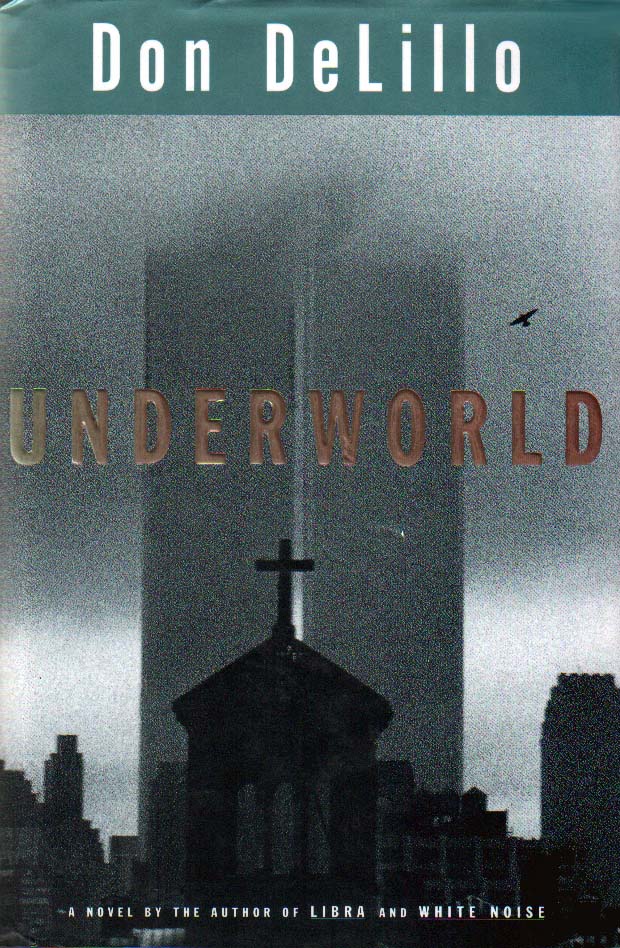
White Noise, DeLillo's most famous book, is probably the best novel I've read during the last couple of years. It quite literally changed the way that I look at the world. So I expected a lot from Underworld, which is fitting, because Underworld expects a lot from me. It's a long, dense book that features many characters, alludes frequently to 20th-century American history, and changes narrative focus and perspective at well. On top of that, it tells its fractured story mostly in reverse chronological order.
DeLillo is much beloved among American literary scholars, and Underworld is a case study of his academic appeal. It's the kind of book that's best read alone in a quiet room, with a pen in one hand and a cup of coffee in the other (and a browser window open to Wikipedia, if you know what's good for you). It begs for interpretation, elucidation, illumination.
Subscribe to:
Posts (Atom)